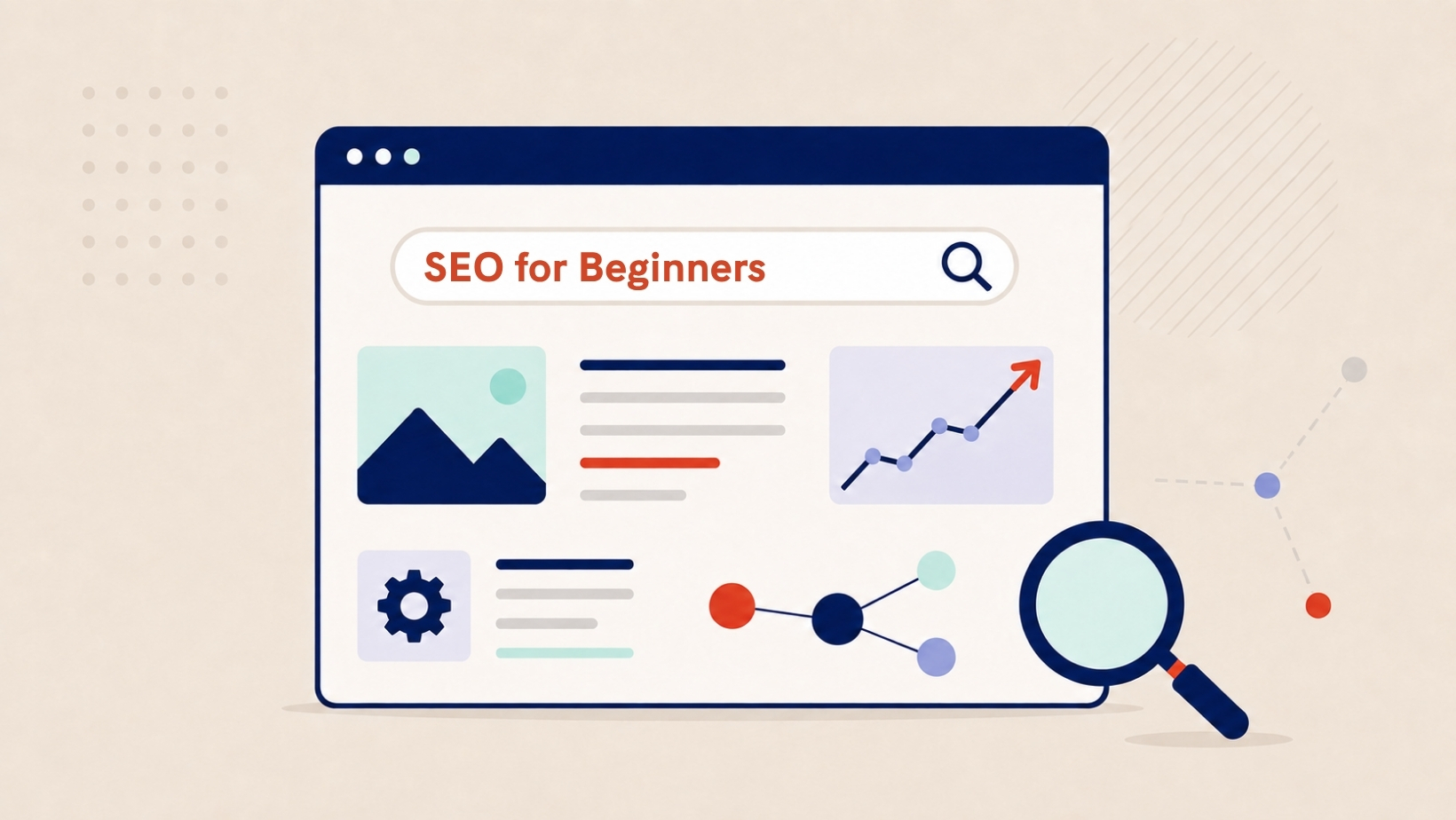
SEO has a reputation for being more complicated than it needs to be.
The advice often arrives as a pile of disconnected instructions: use keywords, publish content, improve page speed, earn links, update your Google Business Profile and prepare for AI search. None of that is necessarily wrong. It just doesn’t explain how the pieces work together.
SEO for beginners becomes easier to understand once you see it as one connected job. Your website needs to be accessible to search engines, relevant to what people are looking for and useful enough to earn their attention. It also needs to give people a clear reason to trust your business and take the next step.
That work now supports visibility across traditional search results, maps, images, rich results and AI-generated answers. Search has changed, but the foundation hasn’t disappeared.
This guide covers how search engines work, the main areas of SEO, what businesses should prioritize and how to tell if the work is producing something useful.
Key Takeaways
- SEO helps search engines understand your website and helps the right people find it.
- A webpage needs to be crawlable and indexable before it can appear in organic search results.
- Technical SEO, website content, on-page optimization, authority and local visibility work together.
- Keywords still matter, but the page also needs to address the need behind the search.
- Accurate, experience-based content is more valuable than content written only to target rankings.
- AI search hasn’t replaced SEO. Strong SEO foundations also support visibility in AI-generated answers.
- Rankings and traffic don’t tell the whole story. Qualified inquiries, calls, bookings and sales matter more.
What Is SEO?
Search engine optimization, usually shortened to SEO, is the work of improving how easily search engines can access, understand and present your website.
It also helps people find your website and decide if it’s worth visiting. That second part matters. A page can rank well and still accomplish very little if it attracts the wrong audience, gives an unclear answer or leaves visitors wondering what to do next.
SEO primarily focuses on organic search results, meaning listings that haven’t been placed through paid advertising. Organic and paid search can support the same marketing strategy, but they work differently. Paid search buys visibility for selected audiences and queries. SEO builds visibility by improving the website, its content and its authority.
The business goal isn’t simply to bring in more traffic. It’s to reach people who are researching a relevant question, comparing providers or actively looking for a service you offer. Ten qualified visitors may be more valuable than a thousand people who were never likely to become customers.
How Do Search Engines Work?
Google describes Search as a three-stage process: crawling, indexing and serving results. Other search systems use their own technology, but this model provides a useful starting point.
Crawling
Search engines use automated programs called crawlers to discover webpages. They find new pages by following links, revisiting websites and reading XML sitemaps, which are files that list important URLs on a site.
If a crawler can’t reach a page, it can’t properly evaluate what’s there.
Indexing
After finding a page, the search engine tries to understand it. It reviews the text, images, links, title element, headings, structured data and other information to determine what the page covers.
The search engine may then add the page to its index, which is the database it uses to retrieve results. Being crawled doesn’t guarantee that a page will be indexed.
Serving Search Results
When someone searches, the system reviews its index and selects results it considers relevant and useful for that query.
Those results may change based on the person’s location, language, device and wording. They may also include traditional website listings, local results, videos, images, products, rich results and AI-generated summaries.
This is why SEO can’t be reduced to adding a keyword to a page. Search systems are trying to determine which result best fits what the person needs.
What Are the Main Parts of SEO?
SEO is often divided into on-page and off-page work. That model leaves too much out. A more useful breakdown includes four connected areas.
Content and On-Page SEO
This includes the information on a webpage and the elements you can directly optimize. Page topics, headings, body copy, titles, descriptions, images and internal links all belong here.
Technical SEO
Technical SEO covers the website foundation that allows search engines to access, render and understand your pages. It includes site structure, crawlability, indexing, mobile usability, performance, security and canonical URLs.
Off-Page SEO and Authority
Off-page SEO includes recognition that exists beyond your own website. Relevant backlinks, brand mentions, reviews, association listings, media coverage and industry relationships can all contribute to how a business is discovered and evaluated.
Local SEO
Local SEO helps businesses appear for searches connected to a location or service area. It includes Google Business Profile optimization, reviews, accurate business information and locally useful website pages.
These areas don’t work in isolation. Excellent content can remain invisible if search engines can’t access it. A technically polished website may still struggle if its pages don’t answer useful questions.
How Do Keywords and Search Intent Work Together?
A keyword is a word or phrase someone uses while searching. Keyword research helps businesses understand how potential customers describe their questions, needs and goals.
But a keyword isn’t an instruction to repeat the same phrase throughout a page.
Search engines have become much better at understanding related language and context. Google specifically notes that website owners don’t need to anticipate every exact variation of a search phrase. A page can relate to many queries without using each one word for word.
What matters is the intent behind the search.
Common types of search intent include:
- Informational: The person wants to learn something.
- Commercial research: They’re comparing products, services or providers.
- Transactional: They’re ready to buy, book, contact or request a quote.
- Navigational: They’re trying to reach a particular brand or webpage.
- Local: They need a provider or answer connected to a specific area.
A blog post may be the right format for someone asking how a service works. A detailed service page may be better for someone comparing providers. A location page can help someone who needs that service in a particular city.
Start with one clear topic for each page. Use the primary phrase where it helps explain that topic, then answer related questions naturally. The goal is clarity, not keyword density.
What Makes Content Helpful and Trustworthy?
Search engines don’t need another page that lightly rewrites what ten other websites have already said. Neither does your audience.
Helpful content should give the reader an accurate and useful response. It should include details drawn from real expertise, customer conversations, first-hand experience, original research or a point of view the business can genuinely support.
That may mean explaining the advantages and limitations of an option, correcting a common misconception or showing how the advice changes in a real situation.
Useful content generally:
- Answers the need that brought the reader to the page.
- Provides accurate and current information.
- Explains important limitations or exceptions.
- Uses specific examples instead of vague claims.
- Cites reliable sources when facts need support.
- Adds something beyond a summary of existing search results.
- Gives the reader a sensible next step.
Google’s people-first content guidance uses E-E-A-T as a framework: experience, expertise, authoritativeness and trustworthiness. E-E-A-T isn’t a score you can add to a webpage. It’s a way to consider whether readers have good reasons to trust what they’re reading.
Named authors and reviewers, professional experience, publication dates, original examples, clear contact information and reliable sources can all support that trust.
Can Businesses Use AI to Write SEO Content?
Yes, but the tool doesn’t remove the need for judgment.
At Netgain, we’ve used AI within our content process for years, but always with human oversight. It can help organize research, identify questions and develop early drafts. Our team still verifies the information, applies the client’s brand voice and business knowledge, edits for clarity and originality, and completes quality control before anything is published.
The problem isn’t simply that AI was involved. It’s publishing large amounts of interchangeable content that adds nothing useful. If anyone could have produced the same article without knowing the company, customer or subject, the draft probably isn’t finished.
Which On-Page SEO Elements Should Beginners Know?
On-page optimization helps readers and search systems understand what a particular page offers.
Page Titles and Meta Descriptions
The HTML <title> element provides a concise description of the page. It often contributes to the clickable title shown in search results.
Write a unique title that accurately reflects the content. Google may still generate a different title link using the visible heading, anchor text or other prominent information.
A meta description summarizes the page and can help someone decide if they want to click. Search engines don’t always display the description you provide, so write a useful summary without treating it as a place to repeat keywords.
Headings and URLs
A clear main heading establishes the page topic. Descriptive subheadings organize the supporting information and make longer pages easier to scan.
Headings aren’t a ranking formula. Their value comes from giving the content a logical structure that works for readers, assistive technology and search systems.
URLs should also be short, descriptive and easy to understand. Be careful when changing an existing URL. Without a redirect, the change can break links and cost the page visibility it has already earned.
Internal and External Links
Internal links connect related pages on your website. They help visitors find useful information and show search engines how your services, locations and resources relate.
External links can support factual claims or direct readers to a credible resource. In both cases, the clickable anchor text should describe where the link goes.
Images and Alt Text
Images should be relevant, properly sized and compressed so they don’t slow down the page.
Informative images also need useful alt text, which describes their meaning or purpose for people using screen readers. Decorative images normally need an empty alt attribute so assistive technology can skip them.
Alt text isn’t a place to insert a list of keywords. It should concisely describe the information or function the image provides on the page.
What Are the Technical SEO Basics?
Technical SEO can get complicated, but beginners don’t need to diagnose every server setting to understand the priorities.
Make Important Pages Accessible
Search engines need working links and successful server responses to reach important pages. XML sitemaps can help them discover URLs, especially on larger websites.
A noindex directive tells search engines not to include a page in search results. A robots.txt file controls crawler access, but it isn’t the right tool for reliably removing a page from the index.
Small mistakes here can make an entire page or section of a website effectively invisible.
Create a Logical Website Structure
Services, products, locations and resources should be organized in a way that makes sense to someone visiting the site for the first time.
Important pages should appear in the navigation or receive internal links from related pages. Avoid orphan pages, which have no internal links pointing to them.
Manage Duplicate and Similar Pages
Duplicate content doesn’t automatically lead to a Google penalty. Search engines will usually select one representative version, known as the canonical URL.
Problems occur when several similar URLs divide attention or cause the search engine to choose a different version than the business intended. Redirects and canonical tags can help identify the main URL.
Support Mobile Users and Website Performance
Google primarily uses the mobile version of a website for indexing and ranking. Important content, links and metadata shouldn’t disappear on smaller screens.
A responsive website also needs readable text, usable navigation, practical forms and buttons that are easy to tap. Our guide to responsive web design explains what this looks like beyond simply shrinking a desktop layout.
Google’s Core Web Vitals measure three aspects of website performance:
- Largest Contentful Paint: How quickly the main content loads.
- Interaction to Next Paint: How quickly the page responds to an interaction.
- Cumulative Layout Shift: How visually stable the page remains while loading.
These metrics are useful diagnostic signals. A perfect score doesn’t guarantee rankings, but a slow or frustrating website can make it harder for visitors to use the page once they arrive.
Use Structured Data Accurately
Structured data, often called schema markup, gives search engines machine-readable information about a page. Depending on the content, it may help the page qualify for rich search features.
Only mark up information that appears on the page and follows the requirements for that type of structured data. It doesn’t guarantee a rich result, a higher ranking or inclusion in an AI answer.
How Do Links, Reviews and Mentions Build Authority?
Backlinks are links from other websites to yours. They can help search engines discover pages and understand how a resource relates to its subject.
Quality matters more than volume. One relevant link earned through respected industry work may carry more value than dozens of links from unrelated websites.
Businesses can earn stronger recognition by publishing original resources, contributing legitimate expertise, building relationships with industry organizations and creating something other people have a reason to reference.
Reviews and credible brand mentions also influence how people evaluate a business. Social media can increase awareness, referrals, branded searches and opportunities to earn links, but it shouldn’t be treated as a direct Google ranking factor.
Buying links or automating link placement can create more risk than authority. If the strategy only works when search engines don’t notice it, it isn’t much of a strategy.
How Does Local SEO Help Businesses Get Found?
Local SEO matters when a business serves customers in a particular city, region or service area.
A complete Google Business Profile gives Google and potential customers important information about the business. That includes its category, location or service area, hours, phone number, website and services.
Local SEO also involves:
- Earning and responding to genuine reviews.
- Keeping business information consistent across directories.
- Creating useful location and service-area pages.
- Publishing content that reflects local customer needs.
- Earning links and mentions from relevant local organizations.
Google identifies relevance, distance and prominence as the main considerations behind local results. A business can improve how accurately its services are represented and strengthen its local reputation. It can’t control where the person searching happens to be.
Copying a page and replacing the city name doesn’t create much local value. A stronger page explains how the service relates to that community, the customers there and the real reason someone would search for it.
How Is AI Search Changing SEO?
AI search hasn’t erased SEO. It has expanded what search visibility can look like.
People can now receive assembled answers through Google AI Overviews, AI Mode, ChatGPT, Copilot and other generative tools. A business may be discovered through a traditional listing, mentioned in an answer or cited as a supporting source.
Two terms are commonly used to describe this work:
- Answer Engine Optimization, or AEO, focuses on making content easier to use in direct, answer-based search experiences.
- Generative Engine Optimization, or GEO, focuses on how content and brands may be understood, referenced or included in generative responses.
Neither replaces SEO. A page still needs to be accessible, understandable, relevant and trustworthy before it has much chance of contributing to an answer.
Content that supports AI visibility tends to provide clear responses to specific questions, accurate facts, original expertise, consistent company information and recognition across credible third-party sources.
Google’s guidance for generative AI features says existing SEO fundamentals still apply. There isn’t a special AI markup shortcut that can compensate for weak content or a website search systems can’t properly access.
The useful question isn’t “How do we write for AI?” It’s “Have we published something clear, specific and reliable enough to be used?”
How Do You Measure SEO Performance?
Rankings can help you understand direction, but they aren’t the final result.
Google Search Console can show search impressions, clicks, click-through rate, queries, landing pages, average position and indexing problems.
Website analytics can then connect that visibility to visitor behaviour and business outcomes. Depending on the website, that may include phone calls, contact forms, bookings, downloads, purchases, qualified leads or revenue.
Local businesses should also review Google Business Profile interactions. AI visibility may be monitored through referral traffic, citations, brand mentions and the reporting tools available for different platforms.
Look for trends over time. Repeatedly searching for one keyword can produce inconsistent results based on location, device and personalization. More importantly, a higher position only matters if it brings the right people closer to taking action.
Which SEO Mistakes Should Beginners Avoid?
Common SEO mistakes include:
- Repeating keywords until the copy feels unnatural.
- Buying links intended to manipulate rankings.
- Publishing generic AI-generated content at scale.
- Creating near-identical location pages.
- Blocking important pages from crawling or indexing.
- Ignoring mobile users.
- Copying competing content without adding anything original.
- Changing URLs without setting up redirects.
- Treating every warning from an SEO tool as equally urgent.
- Chasing traffic unrelated to the company’s customers.
- Expecting immediate or guaranteed rankings.
- Optimizing a website once and never reviewing it again.
SEO tools can surface useful information, but they can’t decide which issue matters most to your business. That still requires context.
SEO for Beginners Checklist
Use this list to identify a practical starting point:
- Define the audience and business result the website needs to support.
- Set up Google Search Console and website analytics.
- Confirm that important pages can be crawled and indexed.
- Research how customers describe their questions and needs.
- Match one clear search intent to each important page.
- Publish accurate content that adds genuine value.
- Improve page titles, descriptions, headings, links and images.
- Check mobile usability and website performance.
- Strengthen internal linking and website organization.
- Complete local business profiles where relevant.
- Build authority through legitimate expertise and relationships.
- Measure the results and improve pages based on evidence.
You don’t need to complete everything at once. Start with the problems that prevent important pages from being found or stop qualified visitors from taking the next step.
Give Your SEO a Clearer Starting Point
Good SEO isn’t about completing the longest checklist. It’s about identifying what is getting in the way of useful search visibility.
For one business, that may be a technical issue keeping important pages out of the index. For another, it may be thin service content, a weak local presence or traffic that never turns into qualified inquiries. The right starting point depends on what the website needs to accomplish.
Contact our team and tell us what you need your website to do and where it’s falling short. We’ll help you identify what’s getting in the way and decide which SEO improvements should come first.
SEO for Beginners FAQs
Is SEO the Same as Paid Search?
No. SEO improves visibility in organic, or unpaid, search results. Paid search places advertisements in front of selected audiences and queries.
Both can support a wider search strategy. Paid campaigns can create immediate visibility, while SEO builds the website and content foundation over time.
How Long Does SEO Take to Work?
There is no standard timeline. Some changes may appear within hours, while others can take several months.
The timing depends on the website’s condition, the market, the competition, the work being completed and how quickly search engines recrawl the affected pages. No ethical SEO provider can guarantee a specific date or ranking.
Can I Do SEO Myself?
Businesses can handle many foundational tasks themselves, especially content updates, business profile management and basic on-page improvements.
Professional support may make sense when the website has technical problems, is being redesigned or migrated, targets competitive markets or needs a multi-location strategy.
Does SEO Guarantee a First-Page Ranking?
No. Search results change, competitors improve their websites and search systems make their own decisions about what to display.
An SEO provider can improve the factors within its control, but it can’t ethically guarantee a particular organic position.
Do I Need to Repeat the Exact Same Keyword?
No. Make the page topic clear, then write naturally using related language and the questions people ask.
Search engines can understand context and closely related phrases. Repetition that makes the copy awkward is more likely to hurt the reader’s experience than improve the page.
Is SEO Still Relevant With AI Search?
Yes. Search systems still need to find, access, understand and evaluate information before they can use it.
Technical accessibility, accurate content, clear structure and genuine authority support both traditional search results and AI-powered discovery.
How Often Should SEO Content Be Updated?
There isn’t one schedule that fits every page.
Review content when facts, services, examples, links or customer questions change. Update a page because it needs better information, not simply to place a newer date at the top.